ISO9001 Certified Professional Manufacturer & Supplier of Optics
+86-0431-87911611 admin@ytoptics.com

Contact us
-
 Email: admin@ytoptics.com
-
 English Inquiry Support:
-
 Add: 2# Automotive InnovationPark,
City,Jilin Province, China
Improvement of Silicon Lens Transmittance by Anti-Reflective Coating
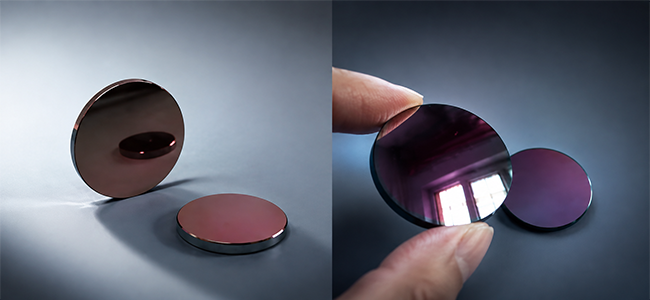
Silicon (Si), with its low density (2.33 g/cm³), high hardness (Knoop hardness 1150), and excellent infrared transmittance in the 1.2–7 μm spectral band, has become the preferred material for near-infrared (NIR) and mid-wave infrared (MWIR) optical systems. However, the Fresnel reflection loss of up to approximately 30% at the silicon-air interface severely limits its practical transmittance. Anti-reflective (AR) coatings address this issue by constructing an interference layer with a quarter-wavelength optical thickness on the silicon surface, effectively reducing the single-surface reflectance from approximately 30% to below 0.5%. Experimental data demonstrate that at 10.6 μm, the transmittance of an uncoated silicon wafer is approximately 0.70 W (relative value), which increases to 1.60 W after depositing a diamond-like carbon (DLC) AR coating—an enhancement of over 128%. Commercially available double-sided AR-coated silicon lenses achieve an average transmittance exceeding 82% in the 3–5 μm band, and can even reach up to 99.89% in specific DF laser bands. This paper systematically evaluates the quantitative enhancement effect of AR coatings on the transmittance of silicon lenses from four key dimensions: the physical principles of AR coatings, representative performance data, coating design constraints, and engineering application considerations.
1. The Physical Nature of Reflection Loss and the Principle of Antireflection Coating
The fundamental reason for the limited transmittance of silicon lenses lies in their high refractive index (n≈3.42@IR), which leads to strong reflection at the interface. According to Fresnel's formula, under normal incidence conditions, the reflectance of light at the interface between air (n₀=1) and silicon (n_S=3.42) is: R = (n_S − n₀)² / (n_S + n₀)² ≈ 30%.
This means that single-sided reflection results in the loss of nearly one-third of the incident light energy. Considering double-sided reflection, the theoretical transmittance of an uncoated silicon wafer is only about 1 − 2 × 30% ≈ 40% (ignoring material absorption), consistent with the trend of the measured high-resistivity silicon terahertz transmittance of only 54%.
The core principle of antireflection coatings lies in destructive interference. When a single-layer thin film with a refractive index of n₁ and an optical thickness of λ/4 is deposited on the silicon surface, the reflected light from the upper and lower surfaces of the film generates a π phase difference. The ideal antireflection coating requires the refractive index to satisfy: n₁ = √(n₀·n_S). Substituting n₀=1 and n_S≈3.42, we obtain the ideal antireflection coating refractive index n₁≈1.85. The refractive index of diamond-like carbon (DLC) films falls within the adjustable range of 1.7–2.2, making it an ideal candidate material for silicon-based infrared antireflection coatings.
For the terahertz band (60–1300 μm), the antireflection coating thickness increases accordingly to the tens of micrometers. Simulation results show that when a 17.8 μm thick Parylene-C film (n=1.68) is coated on a high-resistivity silicon surface, the theoretical transmittance can reach 98.9%.
2. Quantitative Data on Antireflection Effect
2.1 Experimental Validation Data
A comparative experiment using a CO₂ laser (10.6 μm) as the light source quantitatively revealed the improvement in antireflection coating effect:
The DLC thin film used in this experiment had a refractive index n₁=1.70 and a thickness d=175 nm. Although it did not perfectly match the theoretical optimal value of 1.85, it achieved a doubling of transmittance.
2.2 Commercial Product Indicators
Performance data of industrial-grade antireflective silicon lenses further validated the engineering level of the antireflective coating:
3–5 μm band: After double-sided high-durability antireflective coating (HDAR), the reflectivity can be controlled at R_avg < 0.5%, R_abs < 1.5%, corresponding to an average transmittance >82%.
8–14 μm band: The transmittance of germanium lenses (refractive index 4.02) after double-sided antireflective coating reached over 92%; the average transmittance of silicon lenses after similar coatings was >82%.
DF laser band: Using a ZnSe/YbF₃ or ZnS/YbF₃ multilayer film design, the experimental transmittance of the silicon window reached 99.89%, close to the theoretical limit.
2.3 Terahertz Band Performance
In the terahertz band, the transmittance of high-resistivity silicon (HRFZ-Si) without coating is only about 54%. After double-sided Parylene antireflective coating, the transmittance at the center wavelength can reach over 90%. For the special geometry of hemispherical lenses, single-sided coating can improve signal gain by 30–50%.
3. Constraints and Optimization of Film System Design
3.1 Limitations of Single-Layer Films
Theoretically, a single-layer antireflection film can reduce the reflectivity to zero at a specified wavelength, but its refractive index must precisely satisfy √(n₀·n_S)≈1.85. Diamond-like carbon (DLC) films can achieve refractive index control from 1.7 to 2.2 by adjusting the fabrication process (e.g., sputtering power, gas partial pressure), perfectly covering the antireflection requirements of silicon and germanium.
3.2 Broadband Antireflection and Multilayer Film Design
Single-layer films only achieve ideal antireflection for a single wavelength; wide-band applications require multilayer film systems. Taking the DF laser window as an example, using a two-layer and five-layer film system design with a ZnSe/YbF₃ combination can achieve transmittance better than 99.5% in specific wavelength bands.
3.3 Mechanical Durability of Film Layers
The practical application value of antireflection films also depends on their environmental resistance. Studies have shown that silicon-based antireflective films modified with short-chain perfluoroalkyl groups can improve pencil hardness from 5B to 3H, and maintain good optical performance even after sandpaper abrasion and cotton ball rubbing. Parylene coatings showed no performance degradation in thermal cycling tests from 77K to room temperature.
4. Key Considerations in Engineering Applications
4.1 Advantages of Silicon Lenses
Silicon's low density (half that of germanium) and high hardness make it irreplaceable in weight-sensitive infrared systems. The application of antireflective coatings further unlocks this material's potential—in equipment such as MWIR imaging and NIR spectrometers, coated silicon lenses can achieve near-theoretical transmittance without increasing system weight.
4.2 The Necessity of Double-Sided Coating
Most commercially available silicon lenses employ a double-sided coating design. This is because single-sided antireflection only addresses the reflection problem at one interface; the uncoated surface still contributes approximately 30% of the reflection loss. Double-sided coating can reduce the total reflection loss from approximately 60% to <2% (double-sided R < 1%).
4.3 Selection of Coating Materials
Different wavelength bands require different antireflective coating materials:
Mid-infrared (3–5 μm): HDAR coatings balance antireflection and mechanical protection.
Far-infrared/terahertz (>50 μm): Polymer films such as Parylene and polyimide are the mainstream choice due to their refractive index matching and processability.
High-power laser: ZnSe/YbF₃ combinations can withstand continuous laser irradiation of 4.3 kW/cm².
Conclusion
Antireflection coatings offer a transformative improvement in the transmittance of silicon lenses: reducing single-sided reflection loss from approximately 30% to <0.5%, and double-sided coatings increasing transmittance from ~50% to 82%–99.89%, with the specific value depending on wavelength, coating design, and manufacturing precision. This improvement is reflected in high-resistivity silicon terahertz lenses as a leap from 54% to >90%, and in DF laser windows, it approaches the 99.89% limit.
From an engineering perspective, the significance of antireflection coatings extends beyond improved energy efficiency—higher transmittance means fewer cascaded components, reduced background noise, or the use of lower-power light sources. For silicon itself, the antireflection coating transforms its high refractive index "defect" into a physical parameter that can be utilized through interferometry, thus establishing silicon as a core lens material in infrared optics that combines performance, weight, and cost advantages.
The fundamental reason for the limited transmittance of silicon lenses lies in their high refractive index (n≈3.42@IR), which leads to strong reflection at the interface. According to Fresnel's formula, under normal incidence conditions, the reflectance of light at the interface between air (n₀=1) and silicon (n_S=3.42) is: R = (n_S − n₀)² / (n_S + n₀)² ≈ 30%.
This means that single-sided reflection results in the loss of nearly one-third of the incident light energy. Considering double-sided reflection, the theoretical transmittance of an uncoated silicon wafer is only about 1 − 2 × 30% ≈ 40% (ignoring material absorption), consistent with the trend of the measured high-resistivity silicon terahertz transmittance of only 54%.
The core principle of antireflection coatings lies in destructive interference. When a single-layer thin film with a refractive index of n₁ and an optical thickness of λ/4 is deposited on the silicon surface, the reflected light from the upper and lower surfaces of the film generates a π phase difference. The ideal antireflection coating requires the refractive index to satisfy: n₁ = √(n₀·n_S). Substituting n₀=1 and n_S≈3.42, we obtain the ideal antireflection coating refractive index n₁≈1.85. The refractive index of diamond-like carbon (DLC) films falls within the adjustable range of 1.7–2.2, making it an ideal candidate material for silicon-based infrared antireflection coatings.
For the terahertz band (60–1300 μm), the antireflection coating thickness increases accordingly to the tens of micrometers. Simulation results show that when a 17.8 μm thick Parylene-C film (n=1.68) is coated on a high-resistivity silicon surface, the theoretical transmittance can reach 98.9%.
2. Quantitative Data on Antireflection Effect
2.1 Experimental Validation Data
A comparative experiment using a CO₂ laser (10.6 μm) as the light source quantitatively revealed the improvement in antireflection coating effect:
|
Sample Condition |
Average Transmitted Power |
Relative Improvement |
|
Uncoated Si Wafer |
0.70 W |
Baseline |
|
DLC-Coated Si Wafer |
1.60 W |
+128.6% |
The DLC thin film used in this experiment had a refractive index n₁=1.70 and a thickness d=175 nm. Although it did not perfectly match the theoretical optimal value of 1.85, it achieved a doubling of transmittance.
2.2 Commercial Product Indicators
Performance data of industrial-grade antireflective silicon lenses further validated the engineering level of the antireflective coating:
3–5 μm band: After double-sided high-durability antireflective coating (HDAR), the reflectivity can be controlled at R_avg < 0.5%, R_abs < 1.5%, corresponding to an average transmittance >82%.
8–14 μm band: The transmittance of germanium lenses (refractive index 4.02) after double-sided antireflective coating reached over 92%; the average transmittance of silicon lenses after similar coatings was >82%.
DF laser band: Using a ZnSe/YbF₃ or ZnS/YbF₃ multilayer film design, the experimental transmittance of the silicon window reached 99.89%, close to the theoretical limit.
2.3 Terahertz Band Performance
In the terahertz band, the transmittance of high-resistivity silicon (HRFZ-Si) without coating is only about 54%. After double-sided Parylene antireflective coating, the transmittance at the center wavelength can reach over 90%. For the special geometry of hemispherical lenses, single-sided coating can improve signal gain by 30–50%.
3. Constraints and Optimization of Film System Design
3.1 Limitations of Single-Layer Films
Theoretically, a single-layer antireflection film can reduce the reflectivity to zero at a specified wavelength, but its refractive index must precisely satisfy √(n₀·n_S)≈1.85. Diamond-like carbon (DLC) films can achieve refractive index control from 1.7 to 2.2 by adjusting the fabrication process (e.g., sputtering power, gas partial pressure), perfectly covering the antireflection requirements of silicon and germanium.
3.2 Broadband Antireflection and Multilayer Film Design
Single-layer films only achieve ideal antireflection for a single wavelength; wide-band applications require multilayer film systems. Taking the DF laser window as an example, using a two-layer and five-layer film system design with a ZnSe/YbF₃ combination can achieve transmittance better than 99.5% in specific wavelength bands.
3.3 Mechanical Durability of Film Layers
The practical application value of antireflection films also depends on their environmental resistance. Studies have shown that silicon-based antireflective films modified with short-chain perfluoroalkyl groups can improve pencil hardness from 5B to 3H, and maintain good optical performance even after sandpaper abrasion and cotton ball rubbing. Parylene coatings showed no performance degradation in thermal cycling tests from 77K to room temperature.
4. Key Considerations in Engineering Applications
4.1 Advantages of Silicon Lenses
Silicon's low density (half that of germanium) and high hardness make it irreplaceable in weight-sensitive infrared systems. The application of antireflective coatings further unlocks this material's potential—in equipment such as MWIR imaging and NIR spectrometers, coated silicon lenses can achieve near-theoretical transmittance without increasing system weight.
4.2 The Necessity of Double-Sided Coating
Most commercially available silicon lenses employ a double-sided coating design. This is because single-sided antireflection only addresses the reflection problem at one interface; the uncoated surface still contributes approximately 30% of the reflection loss. Double-sided coating can reduce the total reflection loss from approximately 60% to <2% (double-sided R < 1%).
4.3 Selection of Coating Materials
Different wavelength bands require different antireflective coating materials:
Mid-infrared (3–5 μm): HDAR coatings balance antireflection and mechanical protection.
Far-infrared/terahertz (>50 μm): Polymer films such as Parylene and polyimide are the mainstream choice due to their refractive index matching and processability.
High-power laser: ZnSe/YbF₃ combinations can withstand continuous laser irradiation of 4.3 kW/cm².
Conclusion
Antireflection coatings offer a transformative improvement in the transmittance of silicon lenses: reducing single-sided reflection loss from approximately 30% to <0.5%, and double-sided coatings increasing transmittance from ~50% to 82%–99.89%, with the specific value depending on wavelength, coating design, and manufacturing precision. This improvement is reflected in high-resistivity silicon terahertz lenses as a leap from 54% to >90%, and in DF laser windows, it approaches the 99.89% limit.
From an engineering perspective, the significance of antireflection coatings extends beyond improved energy efficiency—higher transmittance means fewer cascaded components, reduced background noise, or the use of lower-power light sources. For silicon itself, the antireflection coating transforms its high refractive index "defect" into a physical parameter that can be utilized through interferometry, thus establishing silicon as a core lens material in infrared optics that combines performance, weight, and cost advantages.
Share this:


PREV : Who Is Purchasing Optical Rods Lenses? — Selection Criteria and Procurement Drivers in Four Key Sect NEXT : Infrared experiments not yielding results? 90% of the time, it’s because the wrong lens was chosen
TALK TO US 86-15584132290
Call us now!
86-15584132290Call us now!

ONLINE CHAT
 2433808388
2433808388