
-
 Email: admin@ytoptics.com
-
 English Inquiry Support:
-
 Add: 2# Automotive InnovationPark,
City,Jilin Province, China
Core Applications of BK7 Optical Glass Lenses in Machine Vision and Laboratory Systems
BK7 is the most representative borosilicate crown optical glass in the field of optics; since its development, it has been the standard material for optical components such as lenses, prisms, mirrors and beam splitters. Thanks to its excellent balance between optical performance and cost, it occupies an irreplaceable position in machine vision and laboratory systems.
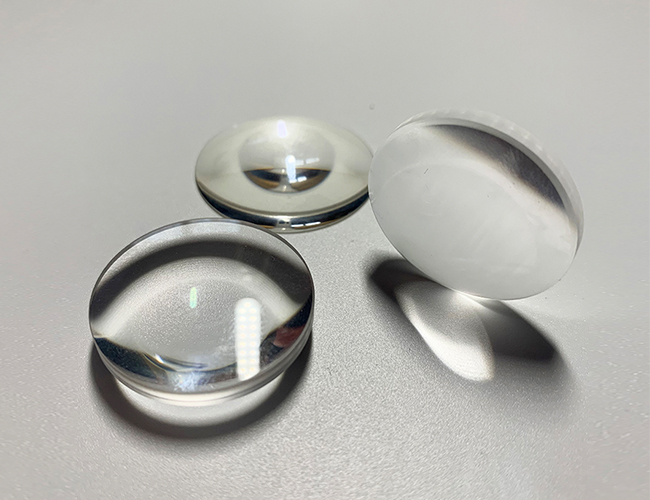
Material Properties Form the Basis for Applications
BK7 exhibits outstanding transmission performance in the visible and near-infrared wavelength ranges, with a typical refractive index of approximately 1.5168 (at 587.6 nm) and an Abbe number of approximately 64.0, enabling effective control of chromatic aberration. Internal bubbles, impurities and stress-induced birefringence are kept to an extremely low level; the material also offers good chemical stability and is easy to precision-polish. These characteristics make it the material of choice for constructing reliable optical systems.
A Key Role in Machine Vision
In machine vision systems, BK7 lenses perform the core functions of beam shaping and imaging. The application of cylindrical lenses is particularly notable—they can focus or expand light in a single direction, converting a spot into a line, making them ideal for structured light illumination or line projection systems, such as laser line generation in 3D scanning and guidance systems.
Furthermore, BK7 plano-convex lenses are frequently used to focus lasers onto detectors or for imaging experiments with monochromatic light sources. They are typically designed for a wavelength of 546.1 nm (e-line) and offer good transmittance in the visible spectrum. To enhance system efficiency, manufacturers typically offer anti-reflection coatings tailored to different wavelength bands, such as 400–700 nm and 400–1000 nm, which can reduce single-surface reflection losses from approximately 4 per cent to less than 1 per cent.
Diverse Applications in Laboratory Systems
In research and laboratory settings, BK7 lenses are used even more extensively. Standardised BK7 lens kits contain plano-convex and plano-concave lenses with a range of focal lengths (varying from 25.4 mm to 300 mm), offering great convenience for the rapid assembly and validation of optical systems. These lenses are utilised in optical path adjustment processes such as beam expansion, collimation and spatial filtering.
A typical example comes from the field of optical inspection: in devices for detecting defects in spectacle lenses, BK7 lens assemblies are used as a dioptre compensation system. By adjusting the distance between the lens assembly and the lens under test (e.g. 20 mm or 32 mm), a wide range of dioptres from +1.25 D to –12 D can be covered, enabling the automatic identification and grading of defects in lenses of varying strengths. This case clearly demonstrates the adaptability and reliability of BK7 lenses in precision measurement systems.
Performance Limitations and Selection Considerations
BK7 is not a universal material. It exhibits significant absorption in the ultraviolet spectrum (<350 nm) and is therefore unsuitable for deep-ultraviolet applications; for high-power laser systems, synthetic quartz offers a higher damage threshold and a lower coefficient of thermal expansion, making it the superior choice. However, for the vast majority of machine vision and standard laboratory systems operating in the visible and near-infrared spectra, BK7 offers the optimal balance between performance and cost, making it a sensible choice for optimising project budgets.
Thanks to their stable material properties, extensive range of product specifications and mature manufacturing processes, BK7 optical lenses have become essential optical components bridging the gap between laboratory research and industrial inspection. As machine vision continues to evolve towards higher precision, BK7 lenses, combined with advanced coating technologies, will continue to play a key role in beam control and imaging systems.


PREV : Deformation Control of Large-Aperture Optical Windows in Vacuum/High-Pressure Environments NEXT : A Comprehensive Guide to Selecting Optical Coatings: Characteristics and Applications of Six Common
 86-15584132290
Call us now!

 2433808388